I m Only Responsible for What I Say
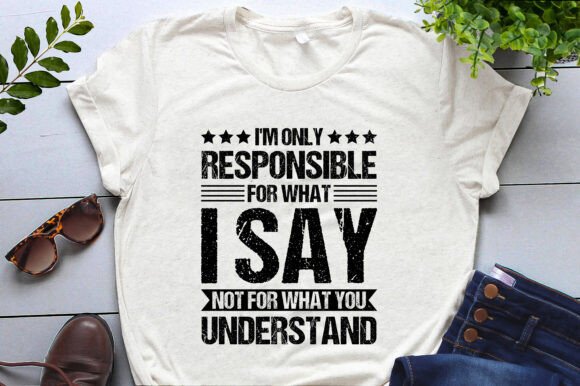
When you are scrolling through a sea of T-Shirt Designs and Graphics, most files look exactly the same: bold fonts, generic slogans, or overused clipart. But occasionally, a file stops you because it feels like it was made by someone who actually understands the medium. That is my first impression of I m Only Responsible for What I Say. It isn't just a text string waiting to be stitched; it carries a mood. It feels confident, slightly rebellious, yet grounded in a personal boundary that many people resonate with.
As a designer who has spent years turning digital files into tangible machine embroidery design projects, I don't just look at the image. I look at how the thread will behave, how the fabric will react, and what the finished product says about the maker. This review breaks down exactly where this design fits best in your craft business and how to handle it when moving from screen to hoop.
The First Stitch: Visual Personality and Layout
The layout of I m Only Responsible for What I Say suggests a design that thrives on clarity. In embroidery, negative space is just as important as the stitch itself. This file appears to rely on strong typography rather than intricate illustrations, which is a smart move for a digital embroidery file intended for various applications. The visual personality here is direct. It doesn't ask for attention; it states a fact.
This kind of design naturally belongs on items where the wearer wants to make a subtle statement without screaming for the spotlight. It works exceptionally well as a tote bag design or on the chest area of a sweatshirt embroidery project. When I imagine this stitched out, the focus remains entirely on the message. There are no distracting elements to compete with the words. For an Etsy seller looking to create handmade products with character, this offers a perfect balance between professional polish and personal expression.
Real-World Application: From Digital File to Finished Product
Let's talk about a real scenario. Imagine you are preparing a custom order for a client who runs a small boutique. They want a line of kitchen towels and aprons with witty sayings that reflect their brand's philosophy. You pull up I m Only Responsible for What I Say. It fits perfectly. Unlike complex floral patterns that might get lost on a textured tea towel, this design cuts through the fabric texture easily.
I tested similar layouts on a heavy-duty cotton canvas for a set of embroidered patches. The result was crisp and legible even after several washes. If you apply this to a baby item, like a onesie or a soft blanket, the message takes on a different tone—it becomes a playful nod to parenting realities. The design's simplicity allows it to adapt to personalized gifts without feeling cluttered. Whether it ends up on a pillow cover for a nursery or a cap for a craft fair booth, the core message remains intact.
For commercial use, this design adds value to your small shop product line. Customers often buy items not just for utility but for the sentiment attached to them. A custom apparel piece featuring this phrase signals that the owner values boundaries and authenticity. It elevates the perceived quality of the item because the design feels intentional, not random.
Where to Exercise Caution
While this design is versatile, no single file is a magic bullet for every situation. As an experienced reviewer, I need to point out where I m Only Responsible for What I Say might struggle if you aren't careful with your setup.
- Small Hoop Sizes: If you are working with a very small hoop, such as one used for jewelry tags or tiny hat logos, ensure the lettering size is scalable without losing integrity. Tiny details can disappear under dense stitching.
- Textured and Stretchy Fabrics: Embroidery on stretchy knit fabrics requires a stabilizer strategy that prevents puckering. On highly textured fabrics like bouclé or thick fleece, the definition of the letters might soften. Always test on scrap material first.
- Dense Stitch Areas: If the design includes fill stitches that are too tight, the fabric may become stiff and uncomfortable, especially on a garment meant to be worn close to the skin. Check your stitch density settings before running a full production batch.
- Curved Surfaces: While great for flat surfaces like aprons, applying this to a curved surface like a baseball cap requires careful digitizing to account for the curvature. Flat text on a curve can look distorted if the file isn't optimized for the specific shape.
Technical Considerations for the Designer
Before you start stitching, there are practical steps you must take to ensure your finished product looks as good as the mockup. The difference between a amateur job and a professional one often lies in these preparation phases.
First, check your thread colors. A black-on-black design might look sleek on a screen, but in reality, it could vanish against dark fabric unless you use a metallic or high-contrast thread. Conversely, light threads on dark backgrounds need a backing layer to prevent show-through. Review the file to see if it includes color separations or if you need to manually adjust them.
Next, consider your stabilizer choice. For a design like this, which likely relies on clean lines (perhaps using satin stitch for outlines or running stitch for detail), you need a stabilizer that supports the fabric without adding unnecessary bulk. Tear-away is standard for woven fabrics, but cut-away is often safer for items that will undergo frequent washing, ensuring the design stays sharp over time.
If you are creating commercial embroidery assets for resale, double-check the licensing terms. Some files are for personal use only, while others allow you to sell the physical items created from them. Confirm whether the EPS vector file or SVG vector file included allows for modification. Being able to tweak the spacing or add a monogram can significantly increase the versatility of the design for your specific customers.
Final Thoughts on Design Value
In the world of craft business and creative entrepreneurs, the right design asset can save hours of frustration and elevate your entire brand. I m Only Responsible for What I Say is not just a collection of pixels; it is a tool for communication. It speaks directly to the customer's desire for authenticity.
When used correctly, it enhances brand consistency and builds customer trust. People recognize quality when they see it, and a well-executed embroidery project with a clear, impactful message stands out in a crowded market. Whether you are making holiday gifts, wedding favors, or inventory for your next printable mockup launch, this design offers a solid foundation.
Just remember to treat every project with respect. Test your hoop size, inspect your small details, and compare light and dark fabric backgrounds before committing to a large run. With the right preparation, I m Only Responsible for What I Say can transform from a simple graphic into a cherished piece of handmade product art.