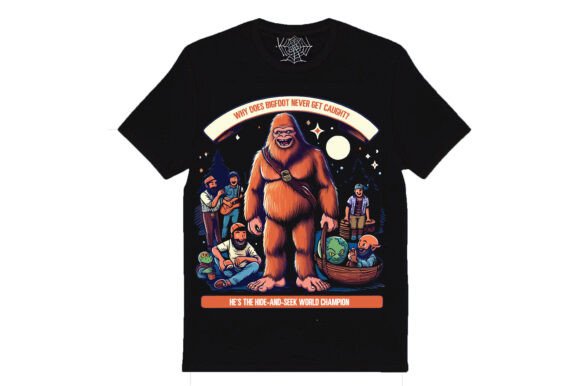
Why Does Bigfoot Never Get Caught He’s
When I first opened the file for Why Does Bigfoot Never Get Caught He's, my immediate thought wasn't about the text itself, but about the vibe. It feels like a design meant to make someone smile rather than stare in awe of technical perfection. As an embroidery designer who has spent years testing files on everything from high-end commercial machines to home hobbyist setups, I look for that specific spark where a graphic translates well into thread. This piece fits squarely into the T-Shirt Designs and Graphics categories, but its true potential lies in how it behaves when stitched onto real fabric.
The premise is simple: a playful question about the elusive creature. In the world of machine embroidery design, humor often travels better than complex imagery because it relies on typography and layout rather than thousands of tiny stitches. My initial assessment suggests this design leans heavily on the personality of the lettering and the spacing between words. If you are looking for a design that adds a touch of whimsy to your shop without requiring a PhD in digitizing, this could be a strong contender.
Real-World Application: From Screen to Stitch
Let me walk you through a scenario I recently faced while preparing for a local craft fair. I needed a unique item for a booth that would appeal to both parents and outdoor enthusiasts. The idea was to create a custom embroidered tote bag featuring a fun, conversation-starting graphic. That is exactly where Why Does Bigfoot Never Get Caught He's shines.
Imagine stitching this onto a sturdy canvas tote. The design isn't just a flat image; it becomes a tactile experience. When I ran a test on a scrap of cotton twill, the layout held up well. The phrase naturally draws the eye across the chest area of a garment or the center of a bag. For a tote bag design, the humor lands perfectly because the recipient reads it as they reach inside, creating a small moment of joy. It works equally well on a sweatshirt embroidery project, perhaps placed slightly off-center on a hoodie for a more casual, streetwear aesthetic.
I also considered using this for a holiday gift. During the winter months, people love quirky apparel. A baby onesie with this text, embroidered in soft pastel threads, could become a cherished personalized gift for a family that loves nature or hiking. The design is broad enough in theme that it doesn't alienate any specific group, making it a safe bet for a small business owner stocking up inventory for an Etsy store.
Visual Appeal and Stitch Clarity
One of the most critical factors for any embroidery file is how the details hold up under the needle. With Why Does Bigfoot Never Get Caught He's, the visual appeal comes from the rhythm of the text. In a successful embroidery project, the satin stitch should follow the curves of the letters smoothly, while any background elements need enough fill stitch density to prevent the fabric from showing through.
If the design includes a silhouette of Bigfoot, the stitch density must be managed carefully. Too much density on a dark fabric can cause puckering, especially if you are working with thin materials. However, if the design is primarily typographic, it offers a lot of flexibility. You can use contrasting thread colors to make the text pop against a navy blue cap or a black apron. The key is ensuring that the running stitch or decorative accents don't get lost in the weave of the fabric.
For commercial embroidery clients who demand consistency, this design offers a professional look without being overly rigid. It strikes a balance between a handmade product feel and a polished finish. When customers see a well-executed design like this, their trust in your brand increases. They know that you care about the quality of the finished product, not just the speed of production.
Navigating Potential Pitfalls
While this design has a lot of charm, it is not without its challenges. No single digital embroidery file is perfect for every surface. There are specific scenarios where Why Does Bigfoot Never Get Caught He's might struggle, and knowing these limitations is crucial for avoiding costly mistakes.
First, consider the hoop size. If you are attempting to embroider this on a very small patch or a delicate baby item, the dimensions of the text might be too large to fit comfortably within the hoop's perimeter. Small hoops require designs that are compact and avoid long, sweeping lines that can shift during stitching. If the design is wide, you may need to resize it, which could compromise the legibility of the text.
Fabric texture is another major factor. Embroidering on stretchy fabrics like jersey or lightweight knits requires extra attention to stabilizer usage. Without the right backing, the tension of the machine can warp the fabric, causing the text to look distorted. Similarly, textured fabrics like fleece or heavy corduroy can hide the finer details of the design. On these surfaces, the contrast between the thread and the fabric might be less distinct, reducing the overall impact of the Graphics.
Dense stitch areas can also be problematic. If the design features a solid block of color or intricate detailing, running it at full speed on a home machine might lead to thread breaks or skipped stitches. It is always wise to check the stitch count before committing to a bulk order. Additionally, products that require frequent washing, such as kitchen towels or daily wear custom apparel, need designs that are robust. Loose threads or weak anchor points can ruin the look after a few cycles in the dryer.
Practical Designer Notes for Success
Before you upload this design to your machine and start cutting fabric, there are several steps you must take to ensure success. The first rule of thumb is to always test the design on scrap fabric. This allows you to see how the machine embroidery design interacts with the specific material you plan to use. You can adjust the tension, change the thread colors, and verify the hoop size without risking a customer's order.
Review the stitch density closely. If the design looks too dense, consider simplifying it or adjusting the underlay settings. Confirm that the design works for both personal and commercial projects by checking the licensing terms provided with the file. Many sellers overlook this step, only to find themselves in legal trouble later. Ensure you have the right permissions to sell finished items created with Why Does Bigfoot Never Get Caught He's.
Inspect small details before finalizing the embroidery project. Tiny lettering or fine lines can disappear if the thread color is too similar to the fabric. Use a black and white mockup to check the contrast levels. Compare light and dark fabric backgrounds to see which setting brings out the best version of the design. Proper stabilizer selection is non-negotiable; it provides the foundation that keeps the design flat and crisp.
Finally, think about the presentation. A well-stitched handmade product tells a story. Whether you are selling on Etsy or at a craft fair, the quality of the embroidery speaks volumes about your brand. By taking the time to evaluate Why Does Bigfoot Never Get Caught He's thoroughly, you ensure that your customers receive a high-quality item that stands out in a crowded market.
In conclusion, this design is a versatile addition to any embroidery project library. It captures a sense of fun that resonates with buyers looking for something unique. By understanding its strengths and respecting its limitations, you can transform a simple digital file into a profitable small shop product that delights customers everywhere.